


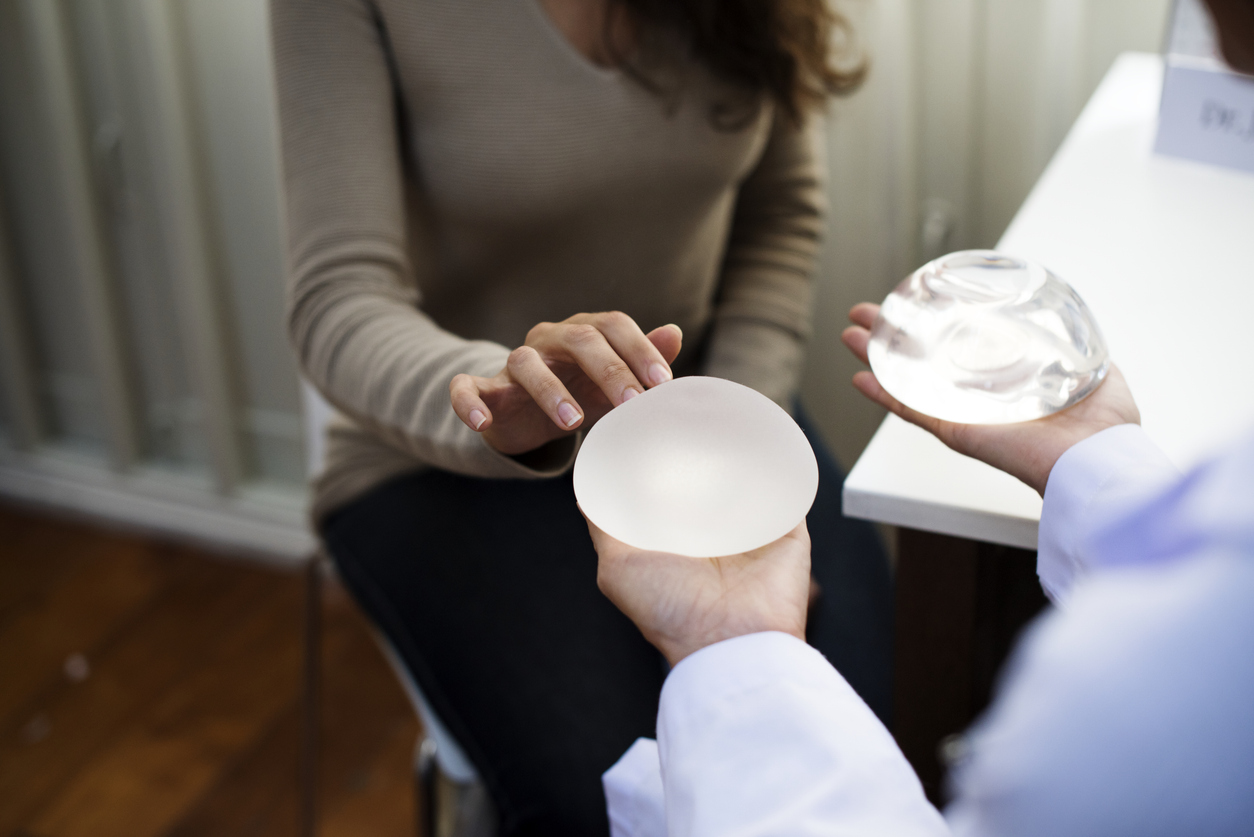
Motiva and Sientra are both premium breast implant lines available exclusively through board-certified plastic surgeons, and neither one is universally "better" than the other. For breast augmentation in Houston, Dr. Courtney chooses between Motiva and Sientra based on a patient's anatomy, aesthetic goals, and how well each brand's specific technology and safety data align with her priorities.
This blog breaks down what sets each implant apart, what the safety data actually show, and how Dr. Courtney walks patients through the decision during a breast augmentation consultation in Houston.
Quick Comparison at a Glance
Before getting into the details, here is how the two brands differ on the points patients ask about most.
- Motiva is a sixth-generation silicone implant, FDA-approved in September 2024, built around a nanotextured SmoothSilk® shell and ProgressiveGel® fill
- Sientra offers cohesive gel implants in round and teardrop shapes, backed by a 10-year clinical study of 1,116 patients
- Motiva can be placed using the tissue-preserving Preservé technique, which Dr. Courtney is specially trained to perform
- Sientra backs its implants with the Platinum20 program, a 20-year warranty covering rupture, capsular contracture, and related complications
- Both report low capsular contracture and rupture rates in their published trial data
What Are Motiva Implants?
Motiva implants are sixth-generation silicone gel implants that received FDA premarket approval in September 2024, the first new breast implant design to earn that approval in over a decade. Nearly four million Motiva devices have been placed worldwide since 2010.
A few features distinguish Motiva from earlier implant generations:
- SmoothSilk® nanotextured surface, designed to reduce inflammation
- ProgressiveGel® fill, built to mimic the movement of natural breast tissue
- FDA trial data showing capsular contracture and rupture rates below 1%
- A 97% patient satisfaction rate reported in the FDA trial data
- Compatibility with the Preservé placement technique
Motiva can also be placed using the Preservé technique. This tissue-preserving approach keeps the implant above the muscle and works around natural blood vessels, nerves, and supportive tissue rather than cutting through them. Dr. Courtney has completed hands-on Preservé training and is authorized to offer it to patients in Houston.
What Are Sientra Implants?
Sientra implants use an exclusive cohesive gel designed to feel soft while holding a stable shape, available in both round and teardrop styles. Round implants create fullness at the top of the breast, while teardrop implants are shaped to mimic the natural slope of breast tissue, with more fullness in the lower pole.
Sientra backs these implants with data from a 10-year clinical study following 1,116 patients:
- Low capsular contracture rates across the study group
- The lowest rupture rate reported in the study
- The lowest reoperation rate reported in the study
- 90% of patients said they felt more feminine
- 91% of patients said their results looked and felt natural
Comparing Safety and Complication Data
Both brands publish strong safety numbers, but the studies behind them are structured differently:
| Motiva | Sientra | |
|---|---|---|
| Data source | FDA trial data tied to 2024 PMA approval | 10-year clinical study of 1,116 patients |
| Capsular contracture rate | Under 1% | Low, and the lowest rate recorded in the study |
| Rupture rate | Under 1% | Lowest rupture rate recorded in the study |
| Reoperation rate | Not separately reported in FDA data cited | Lowest reoperation rate recorded in the study |
| Patient satisfaction | 97% | 90% felt more feminine; 91% said results looked and felt natural |
| Study duration | FDA trial period through 2024 approval | 10 years |
Neither dataset makes one implant categorically safer than the other. Instead, Dr. Courtney looks at how each patient's anatomy, implant placement, and lifestyle line up with what each study measured.
How Capsular Contracture and Revision Risk Factor Into the Decision
Every breast augmentation carries some risk of capsular contracture, the hardening of scar tissue around an implant, which is one of the leading reasons patients later need a breast revision. Because both Motiva and Sientra report low contracture rates in their respective studies, Dr. Courtney also weighs each brand's warranty coverage in case a revision is ever needed.
Sientra's Platinum20 program includes:
- 20 years of free implant replacement for capsular contracture
- 20 years of free implant replacement for rupture
- 20 years of free implant replacement for late-forming seroma
- Financial assistance toward related costs during that coverage window
Motiva's safety profile is instead demonstrated primarily through its FDA trial results rather than a matching long-term warranty structure, which is a distinction Dr. Courtney discusses openly with patients weighing long-term costs against day-one technology.
Matching the Implant to the Patient
Anatomy and goals ultimately decide the choice more than brand loyalty:
- Motiva's Ergonomix® teardrop shape and Preservé placement suit patients seeking a subtle, athletic enhancement, sometimes called a ballerina breast or yoga breast aesthetic, where the goal is proportion rather than dramatic size
- Sientra's wider range of round and teardrop options, backed by its long-term warranty, often appeals to patients prioritizing extensive safety data and long-term coverage over a specific placement technique
During a breast augmentation consultation, Dr. Courtney walks patients through several steps to find the right fit:
- Reviewing implant placement options based on the patient's anatomy
- Trying on sizers with the patient to gauge scale and projection
- Using Vectra XT 3D Imaging to preview likely results
- Weighing aesthetic goals against each brand's technique and warranty tradeoffs
Not Sure Which Implant Is Right for You? Ask Dr. Courtney
Choosing between Motiva and Sientra is not a decision to make from a brand comparison alone. Dr. Courtney, a board-certified plastic surgeon and member of the American Society of Plastic Surgeons and The Aesthetic Society, walks every patient through both options in the context of her own anatomy and goals for breast augmentation in Houston. Contact Dr. Courtney Plastic Surgery to schedule a consultation today.
Disclaimer: This information is provided for educational purposes only and does not replace a consultation with a board-certified plastic surgeon. Outcomes, risks, and suitability vary from patient to patient.
Sources
- U.S. Food and Drug Administration. FDA Roundup, September 27, 2024 (Motiva PMA approval): https://www.fda.gov/news-events/press-announcements/fda-roundup-september-27-2024
- FDA trial data summary (Motiva PMA P230005B): https://www.accessdata.fda.gov/cdrh_docs/pdf23/P230005B.pdf
- Sientra Patient Resources (Platinum20 program details): https://sientra.com/patient-resources/